
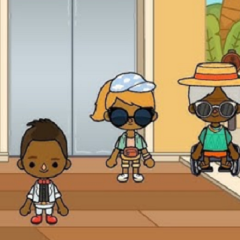
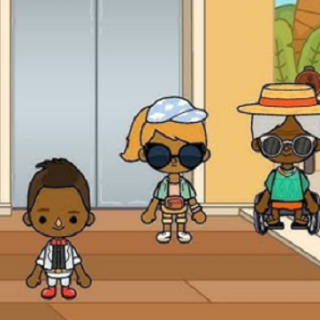



Toca Life Vacation is a sandbox-style game that allows players to explore holiday-themed locations without objectives or scoring. The game is built around free interaction, where characters and objects can be moved, combined, and rearranged to create personal stories. Instead of following missions, players decide how scenes unfold by choosing where characters go and what they do. Each session is shaped entirely by player input rather than predefined progression.
Travel Spaces And World Layout
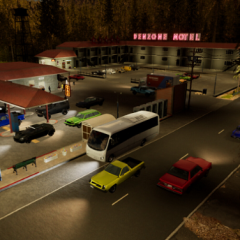
The game world is divided into several locations connected by travel logic. Players usually begin at an airport, where characters can pass through security, board a plane, and arrive at a vacation destination. After landing, new areas become available, including hotels, beaches, and public leisure spaces. Each location is self-contained but connected, allowing characters to be transported freely between scenes. There are no locked areas, so exploration is immediate and unrestricted.
Interactive Objects And Scene Behavior
Every location contains objects that react when characters interact with them. Items can be picked up, stored, worn, or placed elsewhere. Many objects trigger animations or changes depending on context, such as food being consumed or luggage opening. These reactions do not lead to rewards but instead expand possibilities for storytelling. Because nothing is marked as correct or incorrect, experimentation becomes the main driver of engagement.
Common Actions During Play
Across different locations, players tend to repeat a set of actions that define the flow of play:
· moving characters between scenes
· interacting with objects and props
· changing outfits or accessories
· placing characters into shared activities
· resetting scenes to start new situations
This loop can continue indefinitely, as the game does not push players toward completion.
Characters And Story Construction
Characters in Toca Life Vacation have no fixed roles. Any character can be placed in any location, and multiple characters can share the same space. Players often create short narratives, such as airport delays, hotel stays, or beach outings, by positioning characters and objects together. Because the game does not store progress in a linear way, stories can be changed or abandoned at any moment.
