














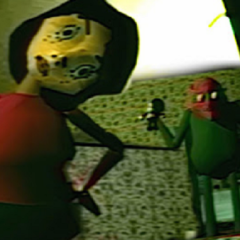
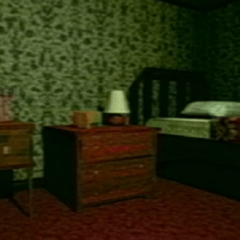
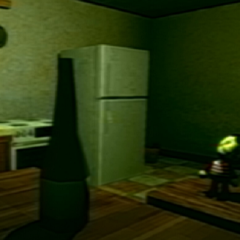

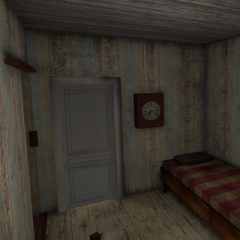
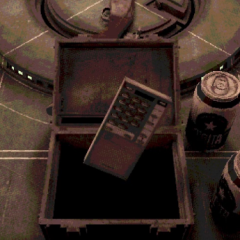


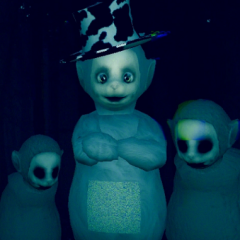
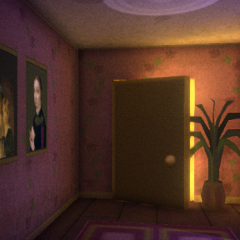
Emily Wants To Play is a first-person survival horror game built around endurance rather than exploration or combat. The player assumes the role of a delivery worker who becomes trapped inside a house late at night. Once inside, escape is no longer possible, and the only objective is to survive until morning. The house serves as the single setting for the entire game, and its layout becomes increasingly familiar as the player is forced to move through it repeatedly while avoiding hostile entities.
Time-Based Structure And Progression
The game is divided into consecutive hourly segments that represent the passing of the night. Each hour introduces new rules or threats that alter how the player must behave. The environment itself does not change, but the way it must be navigated does. As time advances, pressure increases not through speed or scoring, but through the accumulation of overlapping dangers. Progression is strictly linear, measured by how many hours the player survives without failure.
Threat Logic And Player Response
Instead of relying on randomness, Emily Wants To Play is driven by predictable behavior patterns. Every hostile presence follows a specific set of rules that the player must recognize and obey. Survival depends on observing cues, listening carefully, and reacting correctly rather than improvising. In the middle of gameplay, the player repeatedly engages with mechanics such as:
· identifying which threat is currently active
· adjusting movement speed and direction
· deciding when to remain still or relocate
· using room layout to avoid direct contact
These actions form the core loop of every hour.
Exploration Within Constraints
Exploration exists, but it is limited by risk. The player can move freely through the house, but safety is never guaranteed. Certain rooms may be safer during specific hours, while the same spaces become dangerous later. Notes and audio recordings scattered throughout the house provide background information, but they are optional and do not affect survival mechanics. Environmental interaction is minimal, keeping focus on positioning and awareness rather than item management.
Failure And Learning Cycle
Failure is an expected part of the experience. When the player is caught, the game restarts at the beginning of the current hour, allowing repeated attempts without resetting overall progress. This structure encourages learning through repetition rather than punishment. Each failure reveals more about enemy behavior and timing, helping the player refine decisions in future attempts.
Player Experience And Design Focus
Emily Wants To Play emphasizes rule recognition and mental adaptation over reflexes. There are no upgrades, weapons, or branching paths. The challenge comes from remembering conditions and applying them under pressure. Replay value is driven by mastery rather than variation, as success depends on understanding how the game systems interact over time. Through its rigid structure and consistent mechanics, the game creates tension by limiting player options and forcing deliberate, informed movement until dawn arrives.
