























Egyptian Rat Screw is a fast-paced card game played with a standard deck and focused on reflexes, attention, and simple rule recognition. It is commonly played by two to five players, each holding a face-down stack of cards. Players take turns placing the top card of their stack into a central pile, following a fixed order around the table. The objective is to collect all cards in play, which happens by winning the central pile through specific conditions rather than by traditional trick-taking or scoring.
Dealing And Turn Flow
At the start of the game, the deck is shuffled and dealt as evenly as possible among all players. Each participant keeps their cards face down and may not look at them. On a turn, a player places exactly one card from the top of their stack onto the center pile. If the card is a numbered card, play continues to the next player. When a face card or Ace appears, a challenge sequence begins, temporarily changing how turns are resolved and creating opportunities to claim the pile.
Slapping Rules And Reactions
One of the defining elements of Egyptian Rat Screw is the ability for any player to slap the central pile when certain card patterns appear. Slapping interrupts normal turn order and rewards the fastest correct reaction. During play, participants constantly watch for valid patterns such as:
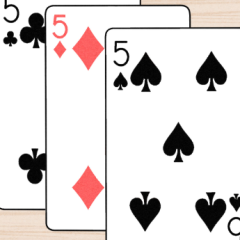
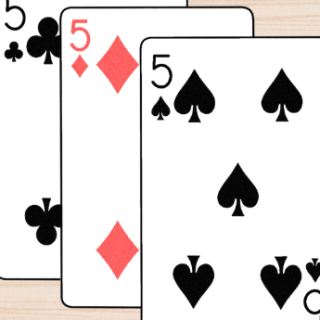
· doubles, where two cards of the same rank appear consecutively
· sandwiches, where matching ranks appear with one card between them
· challenge failures after face cards or Aces
· other agreed combinations defined by house rules
If a player slaps correctly, they take the entire pile and place it under their deck. Incorrect slaps usually result in penalties.
Challenge Sequences And Card Control
When a face card or Ace is played, the next player must respond by revealing a limited number of cards from their deck. The number depends on the rank of the card that started the challenge. If another face card or Ace appears during this response, the challenge shifts to the next player. If the response fails, the player who initiated the challenge wins the pile. These sequences introduce moments where card control and timing influence outcomes more than speed alone.
Player Elimination And Re-entry
Players who run out of cards are not always fully eliminated. In many versions, a player with no cards may still slap the pile if a valid combination appears. A successful slap allows them to re-enter the game by claiming the pile. This rule keeps more players involved and prevents early elimination from ending participation too quickly. The game continues until only one player remains able to collect cards.
Strategy, Pace, And Replayability
Egyptian Rat Screw balances chance with reaction speed and awareness. While card order is random, outcomes are strongly influenced by attention and timing. Games are usually short but can extend depending on slapping rules and player count. Because rules are simple and customizable, groups often replay multiple rounds with small variations. The combination of quick turns, visible interaction, and constant engagement makes the game suitable for repeated play without long-term scoring or setup.
