
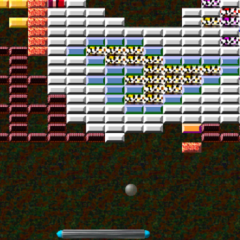
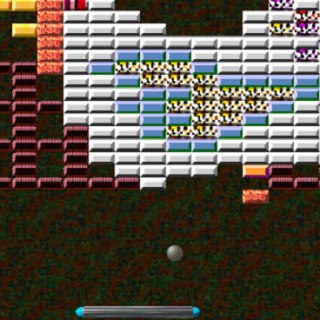
















DX-Ball 2 is an arcade game that follows a structured brick-breaking format where the player controls a paddle to keep a ball in play and remove blocks from the screen. Each stage presents a predefined arrangement of bricks that must be cleared to continue. The objective remains the same throughout the game, but execution becomes more demanding as speed and layout complexity increase. DX-Ball 2 is designed around consistency, requiring players to rely on precision and learned control rather than changing rules.
Game Flow And Control Logic
The game uses a simple control scheme based entirely on horizontal paddle movement. Ball direction is determined by the point of contact with the paddle, which allows experienced players to guide shots deliberately. There are no advanced control options or automated assists, so maintaining control depends on steady positioning. Losing the ball results in the loss of a life, reinforcing the importance of careful movement. This structure makes each mistake visible and directly tied to player input.
Board Design And Difficulty Scaling
DX-Ball 2 is divided into board sets, each made up of multiple levels with distinct brick patterns. Early boards allow wider movement and slower ball speed, while later boards reduce available space and increase pressure. Difficulty rises through layout density and speed rather than by introducing new mechanics. Some bricks require multiple hits to destroy, while others remain indestructible and alter ball paths. This approach keeps the rules familiar while demanding better execution over time.
In the middle stages of gameplay, players frequently interact with the following elements:
· bricks with varying durability
· indestructible blocks that redirect movement
· falling modifiers released from destroyed bricks
· multiple balls active at the same time
· limited reaction time caused by higher speed
These elements expand challenge without altering the core structure.
Power-Ups And Gameplay Decisions
Power-ups in DX-Ball 2 appear as falling icons that the player can choose to collect or ignore. Some effects provide advantages, such as increasing paddle width or adding extra balls. Others introduce complications, including reduced paddle size or faster ball speed. Because power-ups are optional, players must judge whether an effect fits the current situation. Incorrect choices can quickly destabilize a level, especially when several balls are already in play.
Visual Layout And Sound Feedback
The visual presentation of DX-Ball 2 focuses on clarity and function. Bricks are clearly differentiated by color and shape, allowing players to identify their properties immediately. Backgrounds remain minimal to keep attention on the playfield. Sound effects provide immediate confirmation of hits, brick destruction, and modifier activation. Music plays in steady loops that support extended sessions without distracting from gameplay.
