

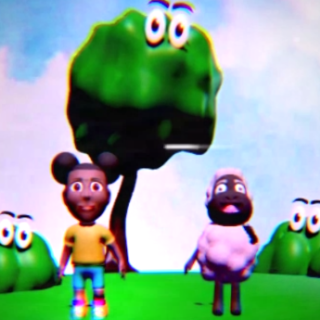









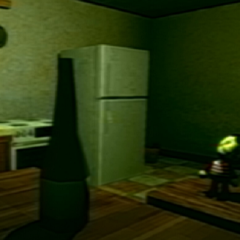











Amanda The Adventurer is a puzzle-based horror game where the player interacts with a fictional children’s TV show through VHS tapes. The main character, Riley, explores a house inherited from a relative and discovers recordings of an old program featuring Amanda and her companion Wooly. The game takes place mostly in a single location, where progression depends on solving puzzles and watching tapes in sequence. The structure combines exploration of the room with interaction inside the recorded episodes.
Gameplay And Puzzle Interaction
The gameplay is built around finding VHS tapes and using them to unlock new puzzles. Each tape contains an episode of the show, and the player can interact with it by responding to prompts or selecting objects. These interactions affect both the tape and the real environment. Clues for solving puzzles are often hidden inside the episodes, requiring careful observation. There is no combat or movement-based difficulty, and progression depends entirely on interpretation and correct input.
- Searching the environment for hidden tapes
- Watching episodes and responding to prompts
- Solving puzzles using clues from videos
- Unlocking new areas or objects in the room
- Replaying sequences to discover alternative outcomes
These actions form the main loop, where each solved puzzle leads to new information or content.
Story And Narrative Structure
The story follows Riley investigating the tapes left behind in the house. As more recordings are viewed, it becomes clear that the show is connected to disappearances and hidden experiments. The characters inside the tapes appear to recognize the player and react to their choices, creating a connection between the viewer and the content. The narrative is revealed gradually through dialogue, hidden messages, and environmental changes. There are multiple endings depending on how the player interacts with the tapes and solves puzzles.
Features And Game Content
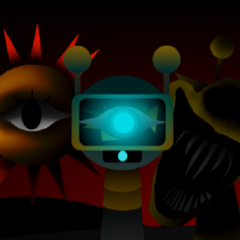
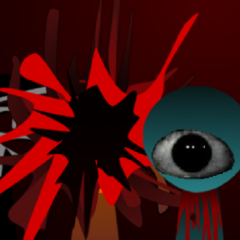
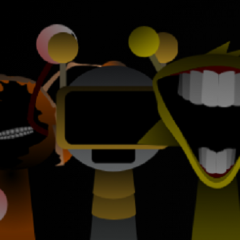
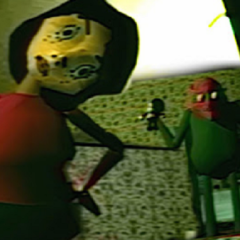
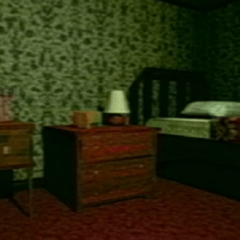
Amanda The Adventurer includes several systems that expand its replay value. The game features multiple tapes, secret recordings, and optional puzzles that unlock additional scenes. The visual style imitates early 2000s children’s animation, combined with distortion and glitches to signal changes in tone. Player choices during interactions can alter outcomes, leading to different endings and variations in events. The limited environment is used to present changing details over time rather than introducing new locations.
Amanda The Adventurer is structured around puzzle-solving and indirect storytelling. The gameplay remains simple, while variation comes from how the player interprets clues and interacts with the tapes, gradually uncovering the connection between the show and the events in the real world.
