


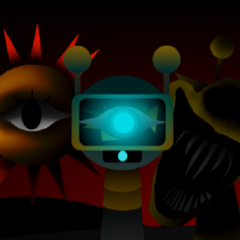

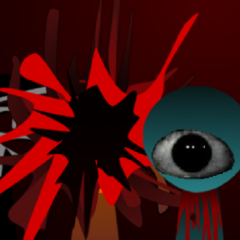
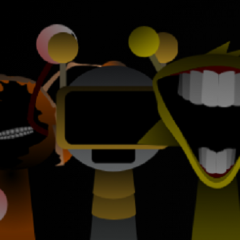
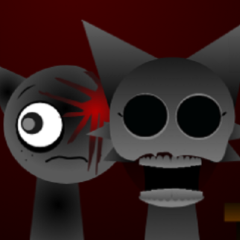
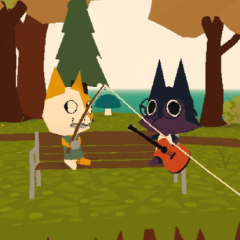














Fort Of Naughty World is a game that centers on controlled interaction within a single enclosed fortress. The player is introduced to an environment that appears stable and predictable, yet gradually reveals layers of internal logic. There are no explicit instructions guiding progression, which places responsibility on the player to interpret how the space functions. Movement, observation, and memory form the foundation of gameplay, and advancement depends on applying learned rules rather than reacting to immediate threats or prompts.
System-Based Exploration
Exploration in Fort Of Naughty World is shaped by systems rather than scripted events. Rooms are arranged to encourage repeated visits, with many paths becoming meaningful only after certain interactions occur elsewhere. The player must track how changes in one area affect others, sometimes across long distances. This design makes exploration deliberate, as progress often requires planning and recall instead of constant discovery. The fortress feels consistent, reinforcing the idea that it operates under fixed principles that can be understood over time.
Interaction And Rule Recognition
The game’s interaction model is based on recognition and repetition. Objects behave consistently once their function is discovered, and similar mechanics reappear in different contexts. Players learn by testing actions and observing outcomes rather than following hints. During the core stages of gameplay, interaction typically involves:
· identifying which objects respond to input
· triggering mechanisms that influence multiple locations
· recognizing environmental changes that persist
· revisiting earlier areas to apply new understanding
· adjusting action order to unlock alternate access
This structure rewards players who think systematically and apply knowledge across the entire environment.
Progress Defined By Access
Progress in Fort Of Naughty World is defined by access rather than completion metrics. There are no score systems, levels, or checkpoints that clearly mark advancement. Instead, the opening of a new route or the transformation of a familiar space signals success. This method allows players to progress at their own pace and supports different problem-solving approaches. Some players may advance through broad exploration, while others move forward by focusing on specific mechanics.
